It’s not usually seen as good form for Lay Clerks to take photographs, however 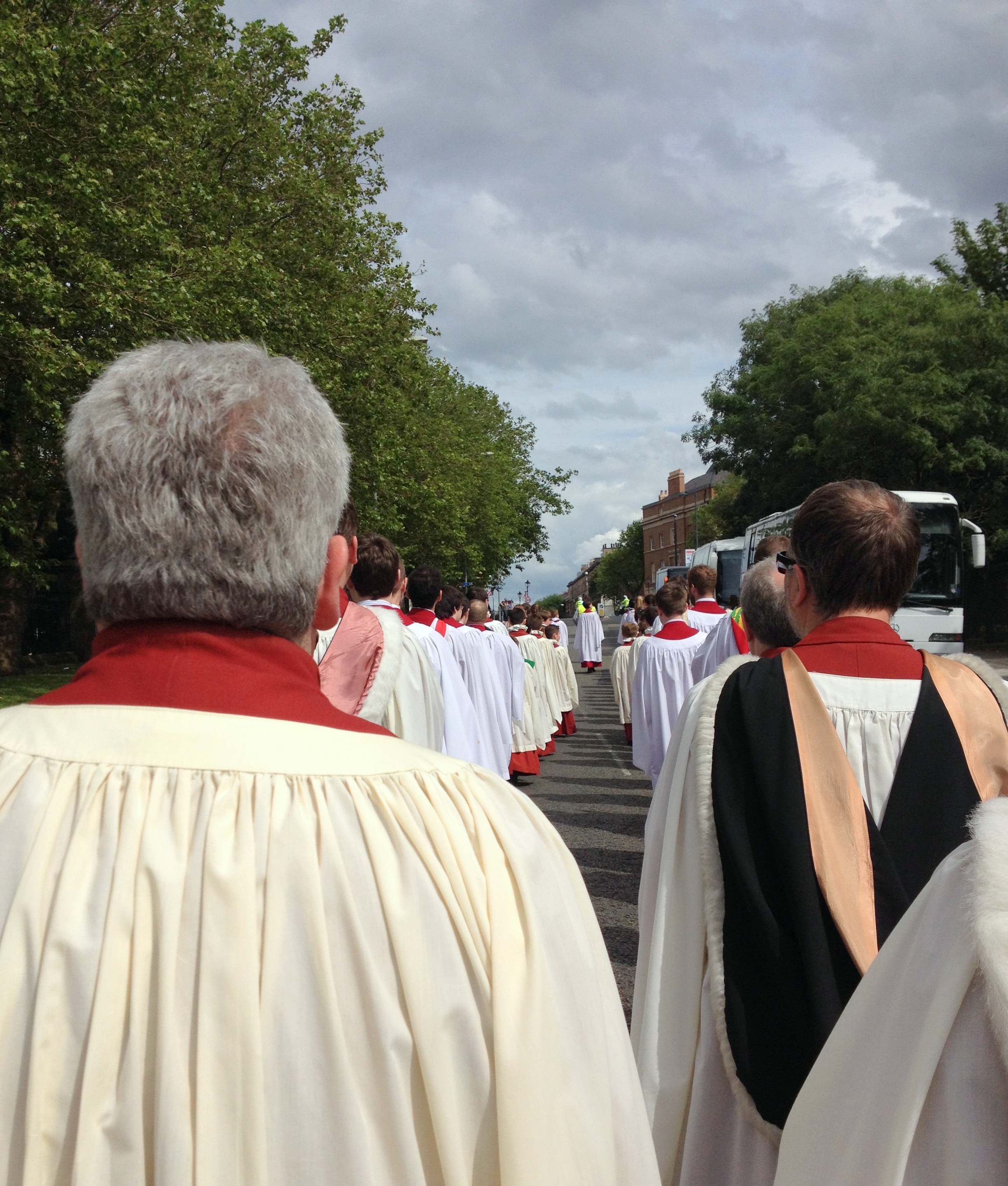 reverently, while in procession. But Pentecost is a bit less formal. In our Liverpool version of the Whitsun Walks, both cathedrals process from one to the other (alternate directions each year). Small crowds of confused tourists gather, and passengers on the 86 bus get an unforeseen 10 minute delay as we are marshalled over crossroads. Prayers are said publicly in favour of church unity (and, privately, against sudden rainstorms like last year).
(Of course, you’ll recall – from The Spinners 1960s hit – that, in Liverpool, “…if you want a Cathedral we’ve got one to spare”. Tactfully, the song doesn’t specify which one is spare.)
Our procession wends along the conveniently-named Hope Street. That’s named after a local eighteenth-century merchant and nothing to do with the ecumenical spirit that it now evokes. Halfway along we pass the memorial to two local prelates, Bishop David Shepherd and Archbishop Warlock, both key movers in encouraging local co-operation and dialogue between the C of E and the Roman Catholic Church
That dialogue was still somewhat lively in Merseyside only a few years ago. I can remember when the Pentecost procession was greeted by a group of staunch protestants (literally so, in this case) bearing placards on the pavement objecting to Anglicans getting involved with Romish ways.
The singers take a fairly pragmatic approach. Both cathedral choirs have a regular member who previously sang “at the other end of the street”. A few years ago I found myself, on a few Sundays, singing in the 3pm Evensong at the Anglican Cathedral (call it “the Proddy one” and your taxi will know which you mean) and then hurrying down Hope Street to do a tenor solo in a Bach cantata following Evening Prayer at “Paddy’s Wigwam”.
This year all was quiet. Well, at least from the theological point of view. However, we were serenaded at sucessive street corners by a gospel choir, the Salvation Army band, a steel band and some samba drummers. Some more musically-conservative lay clerks might have preferred the protesters.